You Deserve a Break Today
Reduce burnout with 22 minutes a day–and long weekends
Do you remember McDonald’s telling us “You deserve a break today,” or Kit Kat’s”Gimme a break” jingle? I think they are provably familiar to most Americans. I believe these campaigns were effective because they struck a nerve. They acknowledged our relentless pace of life, AND they gave us permission to pause without guilt.
But why do we need permission? The same inner critic we talked about in the Talk Back series—especially the one that whispers “You’re only as good as your output”—is often the voice that keeps us from resting. It convinces us that pausing is lazy, that stopping means we are falling behind. In reality, rest fuels the very productivity and creativity we think we’re protecting by pushing through.
Athletes practice rest like their careers depend on it. Why can’t thought workers do the same? Or job searchers? Or parents? Or students?
Mental downtime is not an indulgence. It is one of the most reliable ways to boost performance, protect well-being, and keep creativity alive. Click below if you need permission to take a break from deadlines, job-hunting, or just… life.
A Culture of Busyness

We have built an always-on world. Families with working parents, knowledge jobs that never quite “shut off,” and devices that keep us reachable at all hours create a culture of immediate responsiveness. As Harvard Business School’s Leslie Perlow notes, “We can work from anywhere, and we can interrupt one another anytime.”
Psychologist Larissa Barber calls this workplace telepressure—the nagging need to check and respond to messages right away. In American work culture, busyness has become a badge of honor. If you are not overwhelmed, you risk being seen as less valuable.
The problem is, even when we take time off, we rarely detach. Surveys show Americans leave half their vacation days unused—collectively forfeiting 1.3 million years of rest each year. And many stay tethered to email, even on vacation or when sick.
Rebuilding your resilience starts with a better message:
You are not behind. You’re a work in progress.
So is everyone else, no matter how polished they look.
Our brains are wired to latch on to threats, especially social ones. The amygdala lights up when we feel judged or excluded, which can make social comparison feel like a survival issue, not just a mood swing. Even when we receive positive feedback, research by John Gottman and others shows that it takes about five positive interactions to offset just one negative one. The brain gives negativity more weight, more airtime.
We often track our progress by measuring how others appear to be doing. It’s a broken compass.
You can recognize this inner critic if you hear yourself say:
“They make it look easy.”
“I should be further by now.”
“I’ll never be like them.”
This doesn’t build resilience. It erodes it. Instead of refueling, you’re draining energy on invisible battles. It’s a mind trap you can escape if you train your brain to respond differently.
The Solution: Detachment
Decades of occupational psychology research point to one clear conclusion: to get the full benefit of a break, you must fully disengage—physically and mentally. Organizational psychologist Charlotte Fritz calls detachment “good for well-being no matter how we look at it,” leading to lower exhaustion, better sleep, improved mood, and higher quality of life.
Detachment can take many forms:
- Restful play—activities that absorb you without pressure to produce.
- Loosening your grip—what if you gave 90% instead of 100%?
- Humor—finding lightness, especially in the face of setbacks.
- Giving back—volunteering can reset perspective and energy.
The Science of Rest
Evenings, weekends, and vacations restore our mental capacity. They reduce stress, sharpen creativity, and help us focus. But the benefits fade within two to four weeks, which is why spreading breaks throughout the year works better than saving them all up.
Meditation is one of the simplest ways to build rest into daily life. Neuroimaging studies have shown that regular meditation alters the brain. Over time, expert meditators develop a more intricately wrinkled cortex—the brain’s outer layer, which is critical for many sophisticated mental abilities such as abstract thought. These positive changes in the brain can help counteract the natural decline in cognitive function as we age.
The real benefit of meditation comes from regularity, not length. Twelve minutes of daily mindfulness works like a mental workout. Over time, it improves memory, focus, and overall mental sharpness. Twelve minutes a day for better mental agility. Who could argue with that?
The Business Case
Rest is not just good for people, it’s good for business. In a study of 200 Aetna employees, those who practiced meditation and yoga reported less stress, better sleep, and gained an extra 47–62 minutes of productivity per week. They also lowered their healthcare costs. Progressive companies build in permission, like advising employees to utilize all their vacation days, or adding in perks like yoga and guided meditation sessions.
But you don’t need your company to give you permission to start building in rest. It doesn’t have to require a nap room. It can be as simple as taking microbreaks.
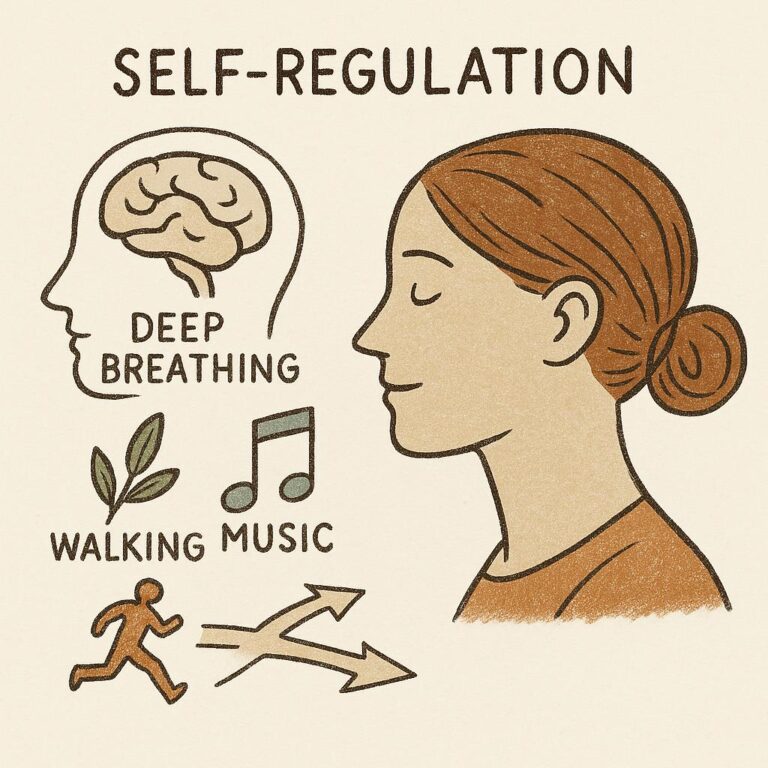
Our mental resources deplete steadily through the day. Strategic breaks—stepping outside, looking away from the screen, taking a mindful breath—can restore cognitive function. Full detachment is best, but even a brief pause can make a difference.
A 2022 meta-analysis on microbreaks found that breaks of 10 minutes or less are effective for well-being, feeling energized and less fatigued. For optimal performance in creative work, breaks of 9 to 10 minutes yield better results.
Permission Prescription to Reduce Burnout
Patient: You
Diagnosis: Early symptoms of overwork, chronic busyness, and creeping burnout
Prescribed by: Your wiser, well-rested self
Directions for Use:
- 12 minutes of meditation — Take once daily, more often if symptoms of brain fog, irritability, or overthinking occur.
- Microbreaks — As needed throughout the day. Works best when taken before productivity crashes. Side effects may include fresh ideas, better mood, and fewer typos.
- Long weekends — Schedule several times a year. Do not combine with work email or project check-ins. For best results, pair with nature, naps, or time with people who make you laugh.
Refills: Unlimited. No permission slip required.
To Do

Reflect
When’s the last time you spent every vacation day truly detached?

Nudge
- Curtail work communications in the evenings and on weekends. Set clear boundaries for when you are available.
- Take microbreaks every couple of hours, and try a brief nap if you can.
- Spend time outdoors in natural spaces, paying attention to sensory details that ground you in the present.
Reset
Borrow the inspiration. Leave the shame.
To Read
“Take That Vacation: Why Time Off Makes You a Better Worker” (Scientific American article by Ferris Jabr ) highlights proven benefits of downtime—restored attention, creativity, and efficiency.
To Watch
“The Power of Time Off” by Stefan Sagmeister is a well-known TEDx talk that emphasizes Sagmeister’s creative sabbaticals and why stepping away fuels long term productivity.“The Power of Time Off”“The Power of Time Off”
Next
We will explore boundaries—how to set them and keep them.