Sleep Interrupted: When your Brain Won’t Let your Body Sleep
How to Hit the Snooze Button on Stress
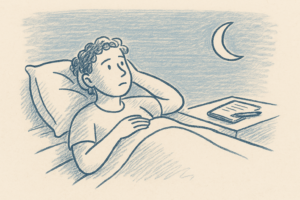
You’re asleep—until you’re not.
You’re finally in bed. Lights off. To-do list on pause. But your brain didn’t get the memo.
That’s when the stress shows up. Not loud, but persistent—like a faucet that won’t turn off. This is nighttime stress, and it hits differently.
Your body may be still, but your mind is buzzing. You replay conversations. Worry about what’s next. Imagine every version of what could go wrong. (Or sometimes, anxiety about success!)
You’re not alone—and you’re not broken. Nighttime stress is a very real response to overstimulation, under-processed emotion, and a nervous system stuck in overdrive. The good news? There are ways to gently bring yourself back to calm.
Why It Happens
At night, your cognitive distractions disappear. There’s (hopefully) no meetings, no notifications, no small talk. That quiet makes room for whatever you haven’t dealt with during the day.
If you’ve been powering through, avoiding emotion, or living on adrenaline, nighttime is often when your body tries to finish what your waking mind skipped. When you wake up overwhelmed, your nervous system is still activated. But you can shift from racing thoughts to restful calm—one small step at a time.
Your sympathetic nervous system, which governs your “fight, flight, freeze, or fawn” responses, doesn’t magically shut off when you lie down. If it was activated during the day and you didn’t discharge that energy it can linger into the night. That means that if you’ve been powering through, avoiding emotion, or living on adrenaline, nighttime is often when your body tries to finish what your waking mind skipped.
During REM sleep, your brain reprocesses emotional memories and stressors. But if your system is dysregulated—due to ongoing stress, trauma, or anxiety—your sleep stages may be disrupted, and REM becomes fragmented. That means your brain doesn’t get a chance to finish “filing away” the emotional and cognitive clutter.
Add to that the fact that rumination, the mental replay loop, is more likely to intensify at night. Without external cues to pull your attention outward, your internal world gets louder. And because cortisol levels begin to rise in the early morning hours, your brain can start to re-engage stress pathways before you even wake.
In short:
- Your body is trying to process what your mind skipped.
- Your nervous system may still be on high alert.
- Your brain lacks enough restorative cycles to quiet the noise.
Then, when you wake up overwhelmed, your nervous system is still activated, and it keeps feeding the loop.
But you’re not powerless. Even small, intentional actions can help you shift from a hyper-aroused state and racing thoughts into one of safety and calm, that will help you sleep.
First, try not to judge the wake-up. Fighting it adds more pressure. Instead, consider meeting it with curiosity. What data would you gather that could help you reset?
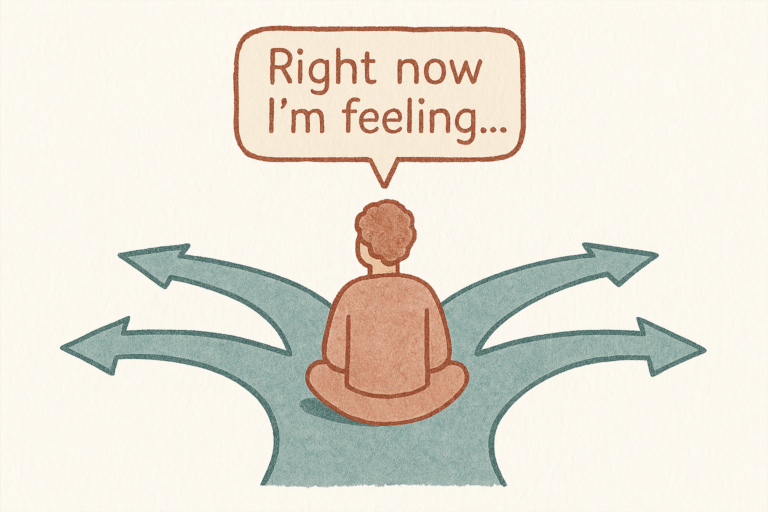
Ask yourself: What am I feeling right now? What does this thought need—action, acknowledgment, or release?
Stress doesn’t wait for daylight. You don’t have to solve everything at 3 a.m. You just have to breathe. Try again tomorrow.
Tweet
What’s your resilience level? Take the quiz at opalcoaching.com
#Resilience #SleepStress
Below, you will find something to do, read, and watch. I have included one thing to reflect on, a gentle nudge to prompt a resilience practice, and a short thought to reset your resilience. I follow with other sources to continue building your resilience toolkit.
To Do

Reflect:
What’s your usual pattern when stress wakes you up? How well is it working?

Nudge:
- Try this grounding practice: Place one hand on your heart, the other on your belly. Breathe slowly.
- Keep a notebook by your bed. If thoughts spiral, write them down to get them out of your head and onto paper. Let the page hold what you can’t fix right now.
- You can also try visual techniques like imagining a whiteboard. Imagine writing the thought, looking at it, and gently erasing it. Symbolic, simple—and surprisingly effective.

Reset:
Your anxiety called. It agrees, this can wait until morning
To Read
“Permission to Feel” by Dr. Marc Brackett – A powerful look at why identifying and expressing emotion is key to better sleep, focus, and well-being. When I read on Kindle, I like to note the passages that resonated with others enough that they highlight them: Here’s one: “…our emotional state determines where we direct our attention, what we remember, and what we learn.”
To Watch
YouTube: “How to Calm Your Racing Mind at Night” – with Dr. Jud Brewer
This short video explores why rumination increases at night and what you can do to break the cycle using mindfulness and curiosity.
Next
Next, we’ll explore how modeling resilience helps others grow stronger and how to do it without preaching, fixing, or over-functioning.