Set Limits at Work without Risking Your Job

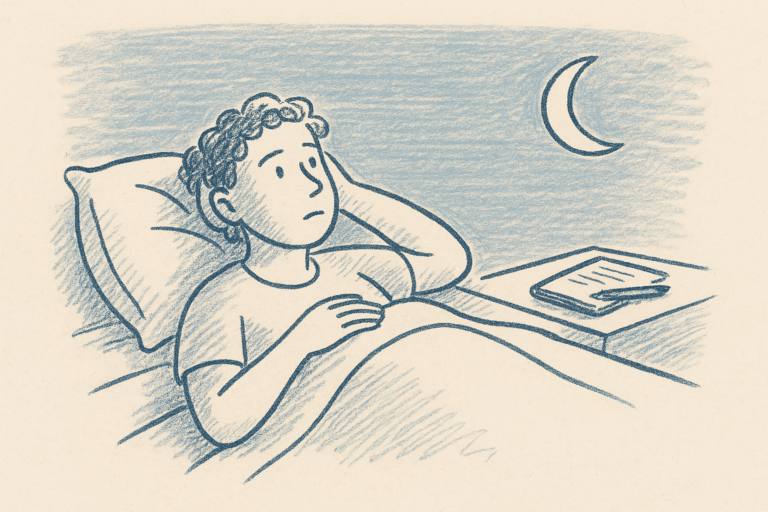
I’ve been thinking about a client—I’ll call her Brenda B, for Boundaries. Her story might sound familiar. She’s smart, dedicated, and the kind of person who always picks up the slack. Over time, that meant she was always on, answering emails late at night, saying yes to extra work when someone got laid off, and quietly carrying more and more.
Now, with job security feeling shaky in this market, the stress is piling up. Ironically, the harder Brenda tries to prove herself at work, the more it spills over at home. She missed her son’s ball game last week, and it really affected her. She told me, “I’m working so much to protect my job, but I feel like I’m losing the things that matter most.”
That’s where resilience coaching comes in. Brenda is beginning to sort through what he truly values and identify his non-negotiables. She’s realizing that setting boundaries isn’t about being selfish; it’s about being sustainable. The limits she practices now are what will carry her through uncertainty, in this job or the next.
Burnout doesn’t always come from too much work—it often comes from too few boundaries. Saying yes to everything might feel like job security, but it erodes your focus, energy, and even your presence at home.
If Brenda’s story resonates with you, or you are among the 82% of workers feeling at risk of burnout, you might find my latest article helpful. Read on.
What boundary do you find hardest to hold at work?
Burnout Risk Keeps Burning Brighter
New research shows 82% of employees are at risk of burnout. Even if you are not feeling it, if you are on a team of ten, eight of your colleagues are at risk. Burnout from workplace stress keeps growing. (Forbes reported it was 42% in 2023.)
Women like Brenda are especially susceptible to burnout because they are more likely to be responsible for the home and caregiving duties in addition to holding full-time jobs. But burnout doesn’t discriminate against men. The fact is, when you combine loaded responsibilities with a lack of boundaries at work, it’s easy to understand why anyone can struggle to keep their heads above water.
Professional boundaries are just like personal ones; they protect your well-being by reducing stress, preserving energy, and fostering resilience. At work, that means setting limits on workload, time, and emotional investment so that you can avoid overcommitment and the risk of exhaustion. At the same time, healthy boundaries make room for flexibility, collaboration, and goodwill, all of which help you thrive as a “good work citizen.”
Boundaries at work go beyond work-life balance and setting your Out of Office notice. Role-based, physical, or emotional in nature. Each type safeguards a different aspect of resilience. In return, they give you control over your time and energy, ensuring you can make independent decisions about your work, prevent enmeshment, and reduce misunderstandings and missed expectations.
Time-Based Boundaries
We’ll start with a deceptively easy boundary. Temporal boundaries separate your work time from your personal time by defining when you are available and when you are not. This boundary may be the simplest to understand, but many people find it difficult to sustain. I learned this when I had to pay overtime per minute per kid at the day care. I had to learn it again when I had a job where I commuted by train. The train doesn’t wait for those who linger too long, and neither should your personal time. Setting temporal boundaries extends beyond defining clear start and end times for your workday. Here are some things to try:
- Use technology like “do not disturb” features, email filters, or calendar blocking to manage interruptions and communicate your focus during the day.
- Co-create overlap hours in global or regionally dispersed teams to reduce missed expectations and improve healthy collaboration.
- Log off entirely rather than ‘just checking’ emails at night.
These boundaries support resilience by giving your brain the downtime it needs for recovery. Regular rest fuels focus, mood regulation, and the capacity to handle stressors with more flexibility. Let’s get a little more complex.
Role Boundaries
Role boundaries clarify what is yours to do, what belongs to others, and how to say no when demands go beyond what is reasonable. Without them, people drift into over-functioning, unclear ownership, and resentment. This is especially difficult if you are like my client, Brenda, who felt pressured into taking on more work in the face of layoff threats. Here are some things to try:
- Seek clarity on priorities to ensure you complete the most essential work.
- Delegate tasks when your plate is already full.
- Say no to responsibilities outside your role.
Resilience depends on this kind of clarity, allowing you to conserve energy and reduce the mental load of constant firefighting. You can also do a better job on what you truly own. Next, we dive into messier work boundaries, physical and emotional.
Physical Boundaries
Physical boundaries protect your comfort and your sense of safety. They range from personal space and greetings to how you define your workspace. I’ve had to smile through a “We are huggers here” introduction, but learned it is okay to say, “I prefer a handshake.”
Physical boundaries can include simple limits, like maintaining distance, using headphones, and ensuring your personal belongings are not interfered with. However, these boundaries can extend further, such as defining one’s workspace to support comfort and autonomy. That’s easier in a remote role, of course, and more difficult to do in a hoteling space. Working in a temporary space requires more effort in proactive communication and managing social cues with cubicle neighbors. If you work from home, having a dedicated space for work helps establish boundaries. Here are some more things to try:
- Set limits on physical touch, such as avoiding hugs or other forms of physical contact.
- Use headphones or dividers to signal focus and maintain a comfortable personal space.
- Protect belongings, such as snacks or office supplies, from shared use.
When your physical environment feels safe, your nervous system relaxes. That calm baseline builds resilience, allowing you to recover more quickly when stress inevitably arises.
Emotional Boundaries
Emotional boundaries in the workplace are the personal limits that define how much you engage with colleagues’ feelings and how much of your own emotions you share, protecting your mental well-being from excessive stress or manipulation. Here are some things to try:
- Don’t engage when a colleague has an outburst.
- Limit gossip or inappropriate sharing.
- Refuse to let someone else’s bad mood dictate yours.
By keeping emotional space intact, you protect your mental reserves. Resilience depends on this separation. Without it, burnout creeps in through constant exposure to negativity.
How to Set and Maintain Professional Boundaries
Boundaries require practice, not perfection. The more consistent you are, the more natural it becomes for others to respect you. (Tip: Coaching is a big help here!)
- Reflect on what makes you feel overwhelmed or disrespected. Identify your needs and non-negotiables, but be prepared for them to shift as life changes, such as the aging of parents, children growing up, or a spouse losing a job.
- Communicate limits clearly and respectfully, explaining your perspective. Don’t assume others know your limits.
- Practice saying no in low-stakes situations to strengthen the habit. (See my previous article on Boundaries as a refresher.)
- Stay consistent. Address boundary breaches immediately: If someone crosses a boundary, address it calmly and professionally to reinforce your limits.
- Model good boundaries, so that others can see resilience in action.
- Boundaries create sustainability and build resilience. You don’t need to apologize for them. Setting professional boundaries is an investment in your well-being and in your ability to contribute fully at work.
Burnout doesn’t always come from too much work. Sometimes it comes from too few boundaries. Are you one of the 82% at risk of burnout? Take the Glow-Up Quiz to find out if your resilience is holding strong or starting to flicker #resilience #burnout #boundaries #boundariesatwork #opalcoaching
Tweet
Below, you will find something to do, read, and watch. I have included one thing to reflect on, a nudge to prompt a resilience practice, and a short thought to reset your resilience. I follow with other sources to continue building your resilience toolkit.
To Do

Reflect: Where in your workday do you feel most drained? That may be a signal of a missing boundary.

Nudge: This week, practice clarifying a new request, even if it feels uncomfortable. Notice how it impacts your energy.

Living with boundaries is living with the freedom to focus on what truly matters.
To Read
“Boundaries: When to Say Yes, How to Say No to Take Control of Your Life” by Henry Cloud and John Townsend. I love anything about boundaries by Henry Cloud. This book provides a comprehensive understanding of boundaries, covers emotional aspects and offers practical strategies to set healthy limits.
To Watch
Boundaries: Why You Need them and How to Set Them Dr. Henry Cloud, a leader on boundaries, demonstrates the benefits of boundaries using the analogy of property lines, then moving to relationships. An excellent return for six minutes of your time.
Next
Up next in the Burnout to Boundaries series, we’ll look at why “work-life balance” is a myth that keeps us chasing an impossible ideal.