How Boundaries Protect your Bandwidth

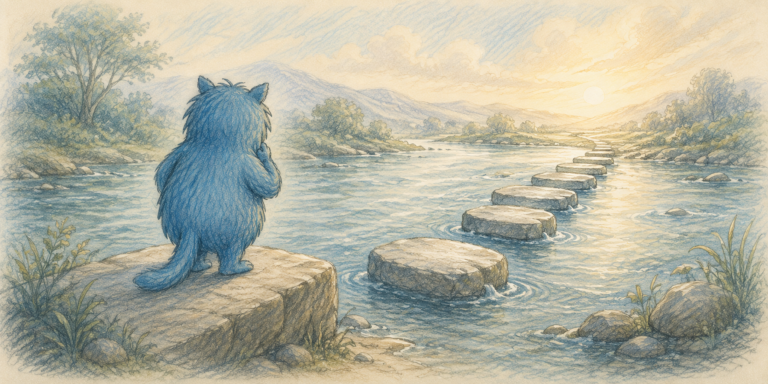
I used to think boundaries were about saying no. Hard lines, closed doors, fences that kept people out. But I’ve learned they’re more like gates. You choose what and who to let in and what and who to keep out. There is a reason behind the saying “good fences make good neighbors,” but fences need gates.
Growing up, many of us were never taught how to build gates. We grew up learning that “yes” earns approval, opportunity, or belonging. Saying no risks labels like lazy, difficult, and uncooperative. Over time, those labels become inner critics whispering that boundaries make us less valuable. Or that someone will withdraw their approval of us if we don’t do what they ask or expect. The codependents among us (raising my hand here) can go into a negative spiral of worrying about what will happen to the other person if we hold our ground, instead of what might happen to us if we don’t.
Burnout feeds on that script. When you consistently ignore your limits, you teach others that their needs always come first, while your nervous system runs in overdrive trying to keep up.
I learned that the very minute I started changing my script, I started changing my toxic relationships. But then, I went too far. And things got lonely. If you become a lone wolf under stress, you probably relate. Instead of setting healthy boundaries that function like gates —controlling who’s inside your property line— you build walls to keep everyone out.
The good news is that you can find ways to protect yourself and stay connected to people. Coaching helped me learn that balance. I learned the language and practice of setting boundaries that were neither too porous nor too rigid. Reach out for a free call to find out if it is right for you. Reach out for a free call to find out if coaching is right for you.
Until then, why not read a quick refresher on boundaries, with a touch of neuroscience to remind us of the physiological impact of stress, and test your burnout risk with my Glow-Up quiz? Read on.
Why Boundaries Matter
Neuroscience gives us a clear clue about why boundaries belong in your resilience toolkit. Stress pumps cortisol through your system to keep you alert and responsive. That’s fine in small doses, but when stress becomes chronic the constant flow of cortisol disrupts sleep, digestion, memory, and emotional regulation. Boundaries work like circuit breakers, interrupting that cycle so the body can reset.
There’s also a psychological benefit. Boundaries create predictability. When you decide in advance what’s negotiable and what isn’t, your brain conserves energy instead of spinning in decision fatigue. Author Nedra Glover Tawwab emphasizes that boundaries are not just about restriction; they are about clarity. Clarity reduces anxiety, prevents resentment, and creates a sense of safety both for you and for those around you. You are not just protecting your time and effort; you are protecting cognitive and emotional bandwidth.
Early Signs You Need Boundaries
- You say yes, then regret it immediately.
- You feel resentful toward people who “ask too much.”
- You’re tired before the day even starts.
- You can’t remember the last time you felt off-duty.
These are signals that your system is overloaded; it’s evidence you need some healthy boundaries.
Boundaries in Action
Boundaries don’t need to be dramatic gestures. In fact, it’s wise to practice in low-stakes scenarios so you build the confidence to handle tougher ones.
- Low-level: Send your lunch order back if it wasn’t made correctly—politely, but firmly.
- Medium-level: When making plans, set your limit before you get to the event: “I’d like to join you, but I need to leave by five. So I’ll drive myself.”
- Higher-level: Shift your language from “I can’t” to “I don’t.” For example: “I don’t lend money to friends.”
Remember, every “yes” has an invisible cost. We all have the same twenty-four hours, and every time you say yes to one thing, you are automatically saying no to something else. Each choice you make reinforces that you matter, your energy matters, and your mental fitness matters.
Every “yes” has an invisible cost. Choices based on healthy boundaries reinforce that you matter. Take the Glow-Up Quiz to find out if your resilience is holding strong—or starting to flicker #resilience #burnout #boundaries #opalcoaching
Tweet
Below, you will find something to do, read, and watch. I have included one thing to reflect on, a nudge to prompt a resilience practice, and a short thought to reset your resilience. I follow with other sources to continue building your resilience toolkit.
To Do

Reflect: When was the last time you told yourself you “had” to do something that you were dreading?

Nudge: Consider why you are choosing to do that one thing. Is it truly a “have to,” or could you change it to a “might do”? What is the impact if you do it? What is the impact if you do not?

Burnout thrives when the lights never go off. Boundaries protect your spark.
To Read
“Set Boundaries, Find Peace” by Nedra Glover Tawwab is written for a wide audience, including people who may not identify with clinical terms like codependency but struggle with overcommitment, guilt, or burnout.
To Watch
Why Good Leaders Make You Feel Safe Simon Sinek’s 12-minute TED Talk about how leaders create environments that either drain or recharge their teams, with direct ties to resilience.
Next
Boundaries can be difficult to navigate because humans are complicated. In the next article, we’ll dive deeper into just one dimension: professional boundaries. We’ll go beyond “work-life balance” and explore how to structure boundaries that preserve both your career momentum and your well-being.