Navigating Chronic Illness with Resilience

As I write this, there’s a medication I don’t want to take sitting in my mailbox. It’s been several weeks in the making, through labs, consultations, and decisions. I thought I had accepted it, but my reluctance to walk the 100 yards to get it tells me otherwise. I’m sad. It’s a sign that things are trending in the wrong direction with one of my chronic illnesses.
It’s a 100-yard journey that will change my immune system, my gut, my skin, my hair, and my sleep. But, according to my care team, the risks are worth the benefits.
When I am ready, my husband will make that walk with me, because best friends go on journeys together, even hard ones.
That’s part of why I’ve been quiet this month, and why the next few posts in this resilience series focus on navigating chronic illness and finding more good days than bad. If you or someone you love is living through something similar, I hope these reflections resonate. Let me know what connects with you in the comments or send me a private message.
6 in 10 live with Chronic Illness
More than 117 million American adults suffer from chronic illness. That’s roughly six in ten. Most likely, someone on your team or in your family is navigating a serious medical condition, whether you know it or not. When I was first diagnosed with a chronic illness, I had to process a range of thoughts and feelings: grief, anger, even guilt, alongside moments of gratitude and acceptance. I thought the most challenging part would be managing symptoms. What I didn’t expect was how much energy it would take to get through a regular day; the unpredictability that upsets plans. Plus, anyone living with chronic illness, or caring for someone who does, knows the healthcare system can feel less like a lifeline and more like an obstacle course. It’s exhausting to fight to be heard, to get clear answers, and to figure out who I could trust.
What I’ve learned from both experience and research is that resilience isn’t just emotional endurance. It’s a skill set that predicts greater happiness and quality of life, even when health doesn’t improve. Strengthening a few small resilience practices makes a measurable difference. In one study of adults living with chronic illness, participants who scored just one point higher on a resilience scale were over five times happier than those who scored lower.
“I Look Okay, but I’m Not”
Chronic illness can be invisible. You might look “fine,” but inside you’re fighting fatigue, pain, or fear that doesn’t show on a lab test. That invisibility makes it easy to be misunderstood—not only by friends and family who want to help in ways that miss the mark, but by medical professionals who minimize abnormal results because they’re not “alarming” yet.
For many, this means years of vague symptoms, inconclusive tests, and gaslighting in exam rooms. I know this myself: I had lab numbers that ran moderately high for years, but I was told they weren’t serious. By the time someone took a closer look, I was having serious issues. That’s the cost of being dismissed. And it’s a reality many people carry silently.
Living with chronic illness can feel like a daily battle with your own body, where each day brings new challenges and shifting limits. It tests not only physical endurance but emotional and mental strength. Feeling unseen erodes trust, heightens stress, and wears down resilience. You start to question yourself: Am I making too much of this? Other people have it worse—so does mine even matter? That inner voice can be as damaging as the illness itself.
Reclaiming Control
Resilience research shows that agency — the belief that you can take action to influence your outcome — is one of the most substantial buffers against the stress of navigating ongoing illness. So is human connection, the “ordinary magic” of trusted relationships. The combination of self-care and communal care is an ongoing theme in resilience, and more critical when managing a day-to-day medical scenario. In particular, learning to reframe negative thoughts and practice self-advocacy, such as focusing on what you can control rather than what you can’t, is instrumental in having more good days than bad.
Here are some more things to consider that help you keep exercising self-care and communal care.
- Track your data. Start a brief health journal to record your symptoms and lab results over time. You may not see benefits immediately, but patterns that feel invisible day to day often reveal themselves over time. Knowing your body and how you respond to foods, meds, and stress can help you anticipate problems or proactively manage flares.
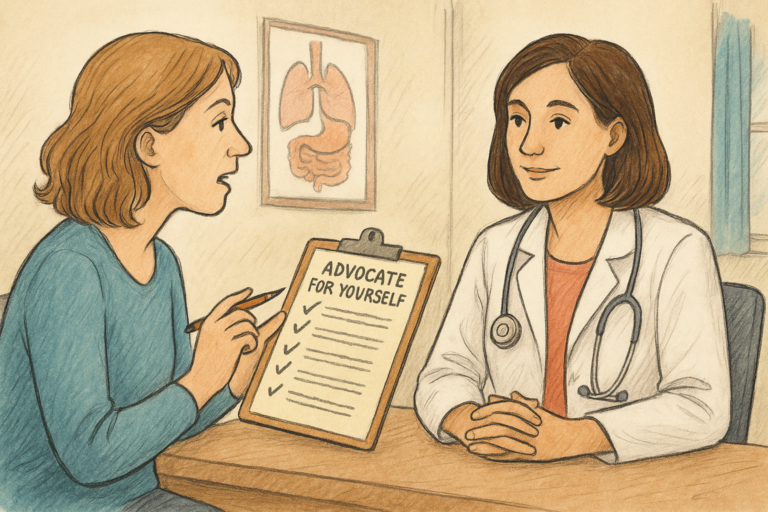
- Advocate for yourself. That doesn’t mean fighting every battle. It means asking questions, tracking your symptoms, and refusing to be brushed off when something feels wrong. It’s hard to do, and even harder when living with things like the extreme fatigue that characterizes most chronic illnesses. The American Psychological Association calls this “patient activation,” and it’s linked to better outcomes across chronic conditions.
- Build trusted partnerships. No one navigates deep waters alone. That means finding healthcare providers who treat you as a collaborator and building support networks that inform rather than overwhelm. Online groups, peer communities, or even one close friend who truly “gets it” can lighten the load. And don’t overlook practical allies. Studies show that financial stress can deepen the emotional and physical burden of chronic illness. Accepting help—whether through community programs, workplace benefits, or financial assistance—isn’t weakness. It’s one more form of resilience.
- Limit the Noise. Online support groups can be a lifeline, offering firsthand experiences and understanding that even doctors may not provide. But they can also take a quiet emotional toll. Reading post after post of others’ suffering can magnify your own fears and fatigue. Before long, what started as connection can turn into overwhelm.
- Seek out advisors, not advertisers. Before you scroll, pause and ask: Will this inform me or will it deplete me? Is this source credible—or are they trying to sell me something? Protecting your energy includes protecting your attention. Not every story deserves your bandwidth.
- Manage Energy, Not Time. This one is big. When you’re living with a chronic illness, energy—not time—is your most limited resource. You can plan your schedule, but you can’t always predict your capacity. Boundaries become essential—for caregivers as well as those managing the illness itself. Just because you have the time doesn’t mean you’ll have the energy. Avoid overcommitting. Set expectations that plans may shift. And keep your non-negotiables clear.
Navigating the deep waters of chronic illness isn’t business as usual. Resilience grows where self-direction meets shared support. You may not control the waves, but you can shape how you move through them.
Burnout doesn’t always come from too much work. Sometimes it comes from too few boundaries. Are you one of the 82% at risk of burnout? Take the Glow-Up Quiz to find out if your resilience is holding strong or starting to flicker #resilience #burnout #boundaries #boundariesatwork #opalcoaching
Tweet
Below, you will find something to do, read, and watch. I have included one thing to reflect on, a nudge to prompt a resilience practice, and a short thought to reset your resilience. I follow with other sources to continue building your resilience toolkit.
To Do

Reflect: When’s the last time you felt dismissed, or dismissed yourself, about your health concerns? What would you have wanted to say differently?

Nudge: Write down one question to bring to your next appointment. Keep it simple: “What else could this be?” or “Can we revisit this if things don’t improve?”

I may need help today, and that’s okay.
To Read
“3 Myths About Chronic Illness and Resilience” Katie Willard Virant MSW, JD, LCSW, writes in Psychology Today about misconceptions of resilience, such as resilience is a character trait, or that it should eliminate negative feelings
To Watch
Mindfulness Meditation for Pain Relief Jon Kabat-Zinn offers a ten-minute meditation that works gently and effectively with even the most trying of circumstances.
Next
In the next article, we’ll explore how to have more good days than bad, for those navigating illness and for their caretakers.