Navigating Grief and Loss with Resiliency
Grief is like a tsunami. Some days the ocean is calm, and you almost believe you have your footing. Then the waves come crashing in, unannounced, unpredictable, knocking the breath out of you with emotions that can suddenly feel overwhelming. This is simply how grief moves.
I don’t think I do grief particularly well. Then again, I’m not sure anyone does.
Like many people, I’ve known loss. People I love, including the recent death of the woman I called my “East Coast Mom.” The kind of losses that change the shape of a family or group of friends. I’ve watched my daughter grieve the death of a best friend, and felt the helplessness of standing beside someone you love when there are no right words. It was rough, and years later, it can still show up when you least expect it.
But I have not lost a child. And I won’t pretend to understand that kind of grief.
That is why the story of Steve and Carolyn impacted me so deeply.
In this article, I explore resilience in the context of grief and loss through their lived experience. With their help, I share what it looks like to breathe in the face of visceral tragedy, to stay afloat when the waves return, and eventually, to build the stamina to navigate a life shaped by profound loss.
If you or a loved one has suffered a loss, what is your ocean doing? Read the full piece below, and please share with others who could benefit.
The Ocean of Grief
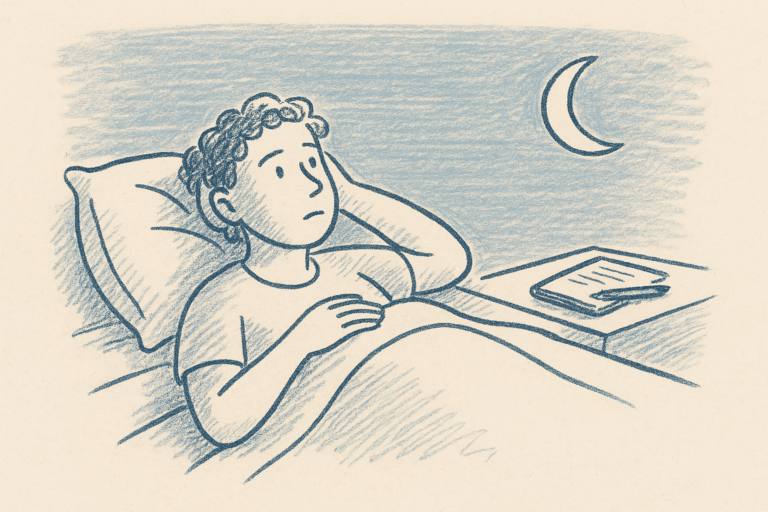
You may wake up with a sense of calm, a feeling that you can breathe again, that the surface is smooth enough to move forward. And then, without warning, the waves come crashing in. A memory, or a song. Perhaps a chance encounter. Small moments that knock the breath out of you and leave you wondering how you can continue.
This is one of the hardest truths about grief. It is not linear. It does not steadily recede like the tide. It moves like the ocean, vast and unpredictable, with moments of peace followed by waves of sadness, longing, and sudden impact. And they often come one after another in no particular order. What is your ocean of grief doing today?
In this article, I share the story of two people who have shown extraordinary resilience through the deepest of tragedies, the senseless killing of their bright, talented son. There is no way to encapsulate all that they have experienced. I share with deep gratitude and honor for their courage and vulnerability, and with the hope that telling it continues to expand the healing they have begun.
Alexander “Xan” Korman 2000 – 2021

Sitting at their son’s hospital bed, Steve and Carolyn were preparing for a long haul. Due to COVID restrictions, they could only be with him one at a time. One sat with Xan, while the other handled the day-to-day tasks from the hotel room. They were asking practical questions. Do I need to quit my job to help him recover? What will recovery look like? How do we manage this over time? How do we manage this over time? Do we need to move?
Then, the doctor told them the unimaginable: there was nothing more they could do. There were no more options.
Grief did not begin when their son died. It began when the future they were all preparing for vanished. With the first call from Xan’s phone number. It was two of Xan’s friends who were with him that night. The voice on the other end said, “Xan’s been shot.” In that moment, Steve and Carolyn entered a grief journey that would shape their lives and, eventually, countless others’. In the nine days between that call and the last day they saw Xan, during the honor walk where he was wheeled down corridors lined with doctors and medical staff to have his organs donated, everything changed.
Resilience in Practice: Connection and Agency
This senseless act of violence triggered a desire in them to find some way to make something good come out of something so awful. What followed was not recovery, but a series of choices, one after the other, that helped them, over time, shape a future that remembers how Xan lived, not how he died.
First, Xan was an organ donor. Xan’s profound gift saved and healed more than 75 lives through the donation of his liver, two kidneys, and bone and tissue. Amid useless violence, this offered a measure of meaning. (You can learn more about InfiniteLegacy here.)
Despite the senselessness, the Kormans knew they couldn’t solve gun violence. There is no direct answer. And sadly, there will most likely be no justice for the shooter. There were too many guns. No physical evidence. No one willing to come forward.
As people began asking how they could help and where they could donate, Steve and Carolyn made another choice. They decided to give back in a more permanent way, through a non-profit. Rather than creating their own nonprofit, they partnered with the Greater Washington Community Foundation to establish a scholarship fund in their son’s name. This allowed them to focus on stewardship and meaning rather than on the administration of funds, and ensured the scholarship would live on even after they are gone.
Being good stewards of people’s generosity mattered deeply to them. They wanted donors to know who they were helping. In looking for partners, they had one non-negotiable–every scholarship must include Xan’s name.
Resilience in the form of agency and connection extended outward into the community. As a young adult, Xan had found a second home at Butler University. With a lifelong love of sports, especially basketball, he discovered a passion for sports photography and dreamed of pursuing it professionally. A former DeMatha High School (Maryland) assistant coach, who had only met Xan a few times, reached out to organize a basketball tournament to raise money for the scholarship. The tournament was put together in just six weeks and ran for two years.
This connection became a form of community resilience.
Grief doesn’t end. It comes in waves.
Tweet
Find your safe harbors.
If you need one, I’m here. opalcoaching.com
What Grief Looks Like in Real Life
Even within the same loss, grief looks different. As parents, Steve and Carolyn were united in wanting to make something good out of tragedy, but they coped in very different ways. Both utilized therapy as part of their healing process. One found meaning in telling the story and holding the details. The other did not. Both are valid, and both are necessary.
Each found a creative outlet. Carolyn continues her fused glass jewelry business. Steve plays the guitar. These activities are not distractions; they are ways to help their grief move rather than stagnate. They are quick to point out that, just as their own experiences differed, everyone’s coping is individual. Some of Xan’s friends still find it difficult to connect, whether due to survivor’s guilt or other aspects of their personal grief journey.
Steve and Carolyn have stayed closely connected to donors, scholarship recipients, and the broader community that wants to remember Xan alongside them. Letters from scholarship recipients are especially poignant. They also have a close circle of friends who encourage them to talk about Xan openly.
None of this fixes the loss. But choosing how to give back, do good in Xan’s name, and connect to others gave them something solid to hold onto in the ocean. Grief remains, but it is shared rather than isolated.
Grief Literacy, not just Compassion
Resilience research has shifted away from the idea that strength comes from bouncing back or returning to baseline. In the context of grief, that baseline no longer exists.
We now understand that grief involves continuing bonds, not closure, and that resilience is the capacity to adapt while carrying loss forward rather than setting it down. This is why metaphors like the ocean resonate so deeply. You cannot control the tides. You cannot stop the waves. What you can do is learn how to breathe, how to float, how to recognize when a wave is coming, and how to build the stamina to rise back to the surface.
Processing grief can be a significant challenge to those directly experiencing loss and their loved ones. According to Dr. Lynn Horridge, “People’s experience of grief is so subjective, and as a culture, we suffer from a lack of literacy around death and grieving. This leaves people feeling isolated and unsupported in their grief, at a time when they need people and support most.”
Steve and Carolyn have shown us how to show up within their grief. They show us that what hurts is avoidance; what helps is presence. They felt the impact of every person who reached out, every message, every note. Today, Steve makes it a point to be the first voice when something unimaginable happens to someone in his life. This is an act of deep compassion, and also, grief literacy.
Grief Literacy at Work
Steven and Carolyn had the support of their workplaces, but that is not always the case. Most companies are deeply unprepared to deal with grief at work, and it shows in policies, behaviors, and culture. Grief is often treated as an interruption rather than a human constant.
This is not always because organizations do not care. More often than not, they do not know how. When workplaces lack the language, training, or permission to acknowledge grief, employees are left to carry it alone, often while being evaluated on performance as if nothing happened.
Grief literacy begins with a few practical truths:
- There is no timeline. Grief is nonlinear and long-lasting.
- Silence often hurts more than imperfect words.
- Saying the name matters.
- Grief is invisible, yet cognitively and emotionally taxing.
- Grief is highly individual.
Steve pointed me to Bereave, an organization that provides bereavement support to other companies. (Bereave.io) The reasons for companies to modernize their bereavement support are compelling. One is that over half of employees who experience a loss leave their jobs within 12 months, which not only affects the person impacted but also directly impacts the company’s bottom line.
Educated, compassionate workplaces acknowledge the reality of the tides of grief and respond with humanity. They:
- Normalize loss as a human experience, not an exception
- Equip managers with simple, human responses rather than scripts
- Allow flexibility without forcing disclosure
- Understand that resilience during grief looks different than “bouncing back”
Steve and Carolyn’s story highlights a powerful resilience practice. When grief takes away what we cannot control, we still search for what we can influence. For them, that meant showing up, staying connected, and building a legacy rooted in Xan’s name. For the rest of us, the question becomes simpler and harder at the same time. How do we show up with presence instead of avoidance, and how do we translate care into action?
If you want a tangible starting point, here are a few ideas.
Ways to Act
- Become an Organ Donor: Sign up online through your state registry or in person at your local motor vehicle department.
- Contribute: If you would like to be part of this legacy, you can give here.
- Apply: The Xan Korman Scholarship offers 5 scholarships to people aged 16 to 25 with a passion for photography. #XanKormanScholarship
- Learn: If you’re interested in learning more about Xan’s story, see his photography, or learn about the organizations the charity supports, visit the Xan Korman Legacy Project website.
To Do

Reflect: What is your ocean doing right now? Where are you expecting yourself or others to be calm when the waves are still very real?

Nudge: If you are in the ocean, choose one small act of agency. Something within your control. Open the window. Take a short walk. Write down one memory. Grief takes so much. This is one way to gently take back a small piece.
If you want to support others, reach out to someone who has experienced loss. Say their person’s name. Share a memory. Let the connection be human rather than polished.

Reset: Grief does not end. It comes in waves. Find safe harbors, the people and places where you can rest.
In Closing
Love does not disappear when someone dies. And grief doesn’t end, either; it just changes shape.
In the years since Xan’s death, Steve has retired, spending more time playing the guitar. His grief shapes the songs he learns and the music he chooses. He plays Cat Stevens’ “Father and Son” before bed. It’s his way of having a conversation with Xan every night.
Carolyn has remained a fierce advocate for organ, eye, and tissue donation.
Despite their loss, life and health issues go on, as Carolyn has moved through breast and skin cancer. More hard stuff for this couple to move through together.
Every year, on Xan’s birthday, September 13th, they visit their local firehouse with a birthday cake and to say thank you on behalf of the paramedics who kept Xan alive long enough to say their goodbyes.
Grief shapes those who live on, but so do moments of connection. People reaching out with memories. Friends tattooing tributes to Xan. Others honor him through their children’s middle names. Recently, Carolyn was recognized by one of Xan’s friends while at physical therapy. These moments are treasures, reminders that Xan’s life, though short, was deeply meaningful and well-loved.
Those who knew him described Xan as selfless, supportive, talented, friendly, knowledgeable, and deeply committed to his craft. He left an impact on the lives he touched. Through their resilience, his parents continue to build on that impact, showing us the face and grace of resilience.
If this resonated with you, you are not alone. And if the waves feel heavy today, reach out, even with a private message or a comment. Say their name. Your hurt is ours.
Below are some resources that may help if you are on a grief journey. Add your own to the comments or direct message me, and I will include them.
To Read / To Listen / To Support
Option B by Sheryl Sandberg and Adam Grant
It’s OK That You’re Not OK by Megan Devine
Bearing the Unbearable by Joanne Cacciatore
Griefcast describes itself as ‘funny people talking about death’. Hosted by Cariad Lloyd, this highly engaging and often funny podcast series features Cariad talking to her fellow comedians and performers about loss.
‘Terrible, Thanks For Asking’. Host Nora McIrney used messages from her husband’s death to create a podcast to get past the “how are you?” “I’m fine!” small talk and get right into the heart of the hard things in life.
Help Texts Clinically sound, scalable bereavement support delivered via text (grief tips and outreach).
Corporate Help Bereave is a technology platform based in Indianapolis that helps companies support employees through grief. Founded to improve the “system of loss,” it provides HR teams and managers with tools for empathetic care, while offering employees resources like checklists for practical tasks, counseling support, and guided, personalized care after a loss.
Next
Thanks for reading, and as always, let me know what resonates.