My Journey: Navigating a Chronic Illness
How to have more good days than bad when facing lifetime health issues
Yes, I have a chronic illness, and I am not OK. I will not be “OK.” That’s the nature of a chronic disease. I look OK, but I’m not. Read on for challenges you or your loved ones face every day and five things to take note of for better days ahead.
I’d say it all started with terrible food poisoning. But that’s not true. The truth is, I was already sick, and my body was soberly marching towards liver failure. It wasn’t until my food poisoning was resolved, and then 139 tests and 11 biopsies later, that I learned I am one of the rare humans who live with a potentially fatal autoimmune liver disorder called, unfortunately enough, Autoimmune Hepatitis, known as AIH.
Rare = Unknown by Most Medical Professionals
Lots of illnesses have terrible names. Mine seems particularly bad to me, because, while technically correct, the word “hepatitis” evokes creepy, invisible virus bugs flying from one body to the next. Plus, no one is quite sure if you are talking about a bug that likes to stay above the belt or not, so to speak. This is true even of medical professionals. Patients with AIH who work in the medical field often comment that they had never heard of AIH before they were diagnosed. In reality, hepatitis means “inflamed liver.” I don’t have a nasty virus; I have an autoimmune issue that is attacking my liver. And, as one of my friends noted, once your body starts hosting one autoimmune little *!$#*, they start inviting all their drunk friends to the party.
People who love you, but don’t understand
I now have a few autoimmune disorders at the party. A common one is Hashimotos, where my system is attacking my thyroid. Another one is Sjogren’s, which usually presents as dry mouth or dry eyes. AIH is similar; it’s not a liver issue; it’s an autoimmune issue that is attacking my liver.
That’s an important distinction because helpful loved ones want to provide a lot of loving advice on how to heal my liver, everything from cleanses to supplements. However, since I have an overactive immune system, things that boost the immune system actually cause damage—like green tea, supplements, and vitamins—fall into the danger zone.
Gaslighting
Liver disorders can be silent killers. Some people get diagnosed with AIH when they are dangerously close to liver failure, presenting with jaundice, for example. Many patients, like myself, get a surprise diagnosis through routine blood tests that show elevated liver functions. In my story, my liver functions were mildly elevated for many years. Despite working with gastrologists on another rare disorder, my moderately increased function tests were noted but not addressed. The immunization storm was building, and by the time of my diagnosis by my new gastroenterologist during my bacterial infection saga, I was informed I was in cirrhosis.
It’s common knowledge that the liver will replenish itself. It’s one of the fantastic things about this complex organ. But imagine the scarring as bubble wrap, with fibrosis wrapping and sectioning off portions of the liver. Then, the liver replenishes itself and pushes up against the bubble wrap until something pops. I am fortunate that my cirrhosis has not progressed to the end stage.
With treatment, the prognosis of AIH is good. My numbers are currently stable. I am in great hands with an experienced hepatologist and transplant center. When I was diagnosed, I was within a year or two of needing a transplant. As of 2025, I am about 6–7 years from the likelihood of a transplant.
5 Actions to Take to Navigate Chronic Illness
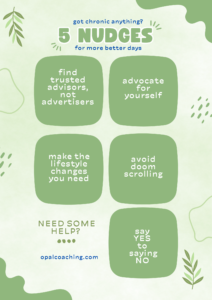
Here are some things that I do to navigate the bad days, so that I can have more good ones:
- I focus on self-management strategies, like learning everything I can about my condition. But, I never use Dr. Google. (I go from a nagging side effect to a death sentence in three clicks!) Instead, I search for medical journals and articles, seeking out trusted advisors, not advertisers.
- I am proactive in managing my care, asking questions, and voicing concerns to my healthcare providers. I was gaslighted for years about my moderately high levels, which led to much more destruction in my body than it needed to be. So I am passionate about advocating for myself. I found healthcare providers I trust, and it goes both ways. Not only do I maintain open communication with them, but I also follow the program and recommendations we have decided on together. For me, I use reminders on my phone so that on the days when the brain fog is heavy, I get that gentle ping.
- I have incorporated lifestyle changes like diet and exercise and managing stress through meditation and journaling. That means, for me, a plant-based diet high in greens, beans, and grains.
- I am building a support network. I connect with others facing similar challenges through support groups online to share experiences and coping mechanisms. Facebook groups are a good place to start, but I stay aware and abort if my support-seeking turns into doom-scrolling.
- I know how important it is to establish goals for health and daily life. I create small, achievable goals to keep me moving forward, taking into account my limitations on a daily basis. Sometimes it’s finding ways to exercise creativity, and sometimes it’s ways to exercise the body. Sometimes, it’s saying yes to a nap. Sometimes it’s saying no.
It is essential to seek professional help when needed to maintain quality of life and cope with the challenges of a chronic illness. That may mean mental health professionals or other therapies. In addition, professional coaching may help, particularly from people who are going through what you are. Reach out to find out if coaching is right for you. It can start with a free chat–no-commitment-required.
I’m writing about this because I tend to live my life out loud, and not talking about my illness feels inauthentic. For better or worse, I’m inviting others on my journey. Not because I want to be talked about, but because I think chronic illness should be talked about. And I want every person who lives with chronic pain and disease to know they are not alone.
~Julee Everett
Hone your craft, speak your truth, and show your thanks